Why changing superfat does not change soap properties (in soap calculators)
When adjusting a soap recipe, many soapmakers expect that increasing or decreasing the superfat will also affect the values of soap's properties - such as hardness, cleansing, or conditioning. However, this is not how soap calculators work.
This article explains how soap properties are calculated, and why changing the superfat does not alter those values - even though it does affect the actual behavior of the soap.
How do soap calculators calculate soap properties?
To calculate soap properties, soap calculators add the percentages of certain fatty acids in the recipe. For example:
- To calculate "Hardness", the percentages of Lauric, Myristic, Palmitic and Stearic acids in the recipe are added - and the result is the value of "Hardness".
- Similarly, to calculate "Cleansing", the percentages of Lauric and Myristic acids are added - and that is the value of "Cleansing".
What happens if superfat changes?
What "changing the superfat" essentially means is "changing the amount of lye we will use" - so that a larger or smaller amount of oils remains unsaponified in the finished soap.
However, using more (or less) lye does not change the percentages of the fatty acids in the soap recipe. Thus, the values of the soap properties (as calculated by soap calculators) remain unchanged.
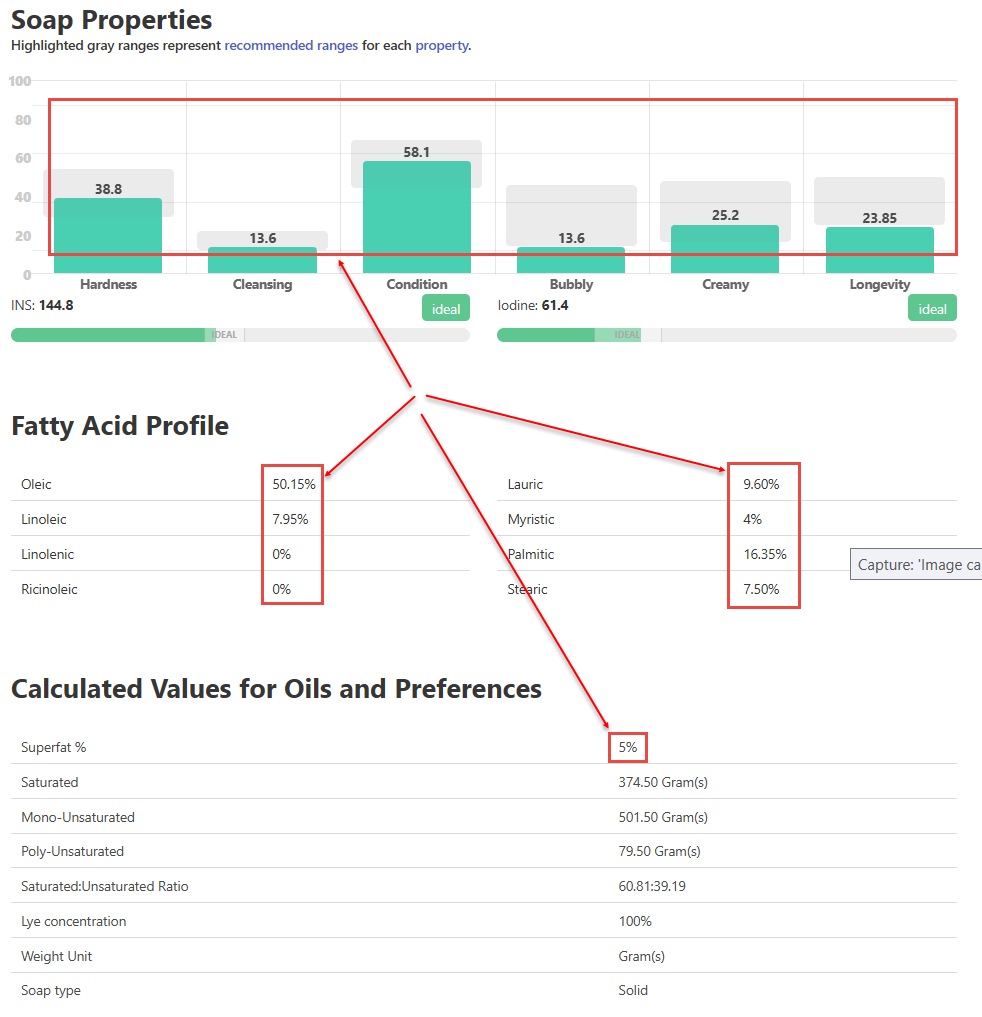
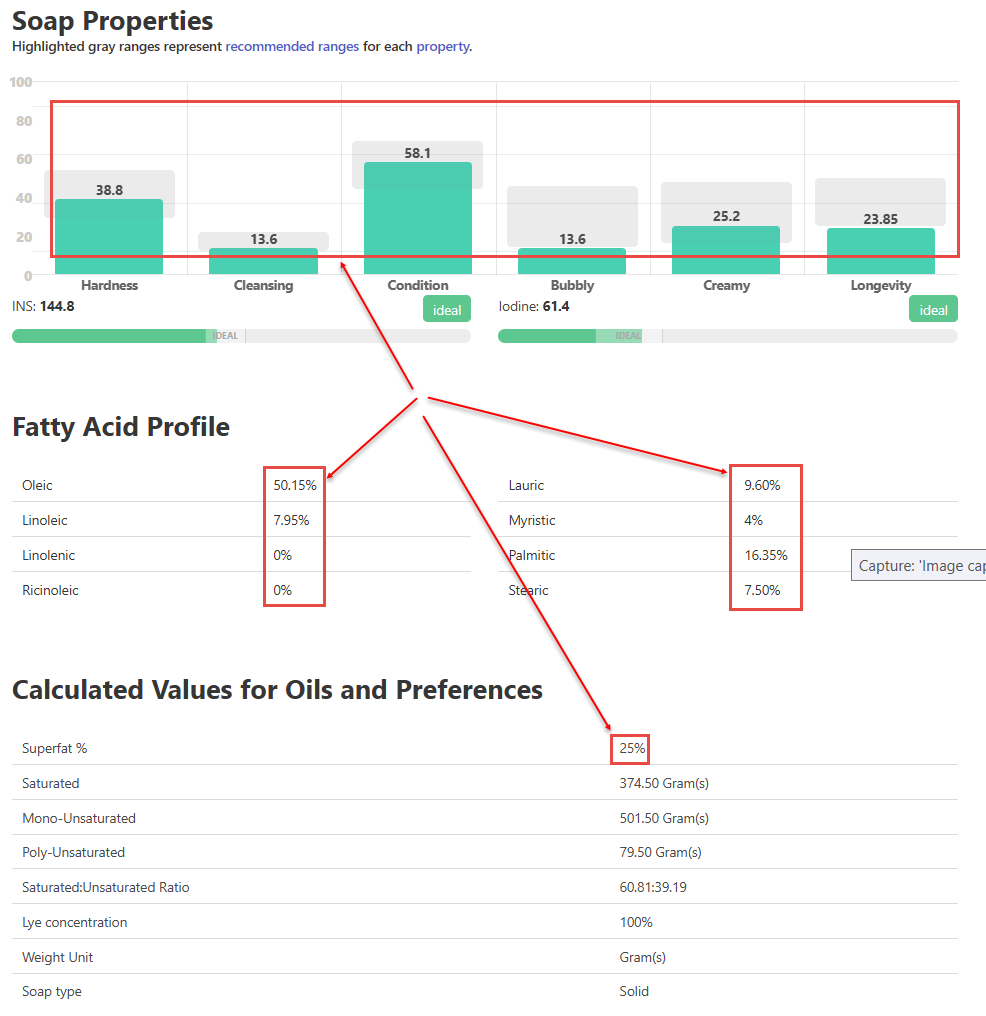
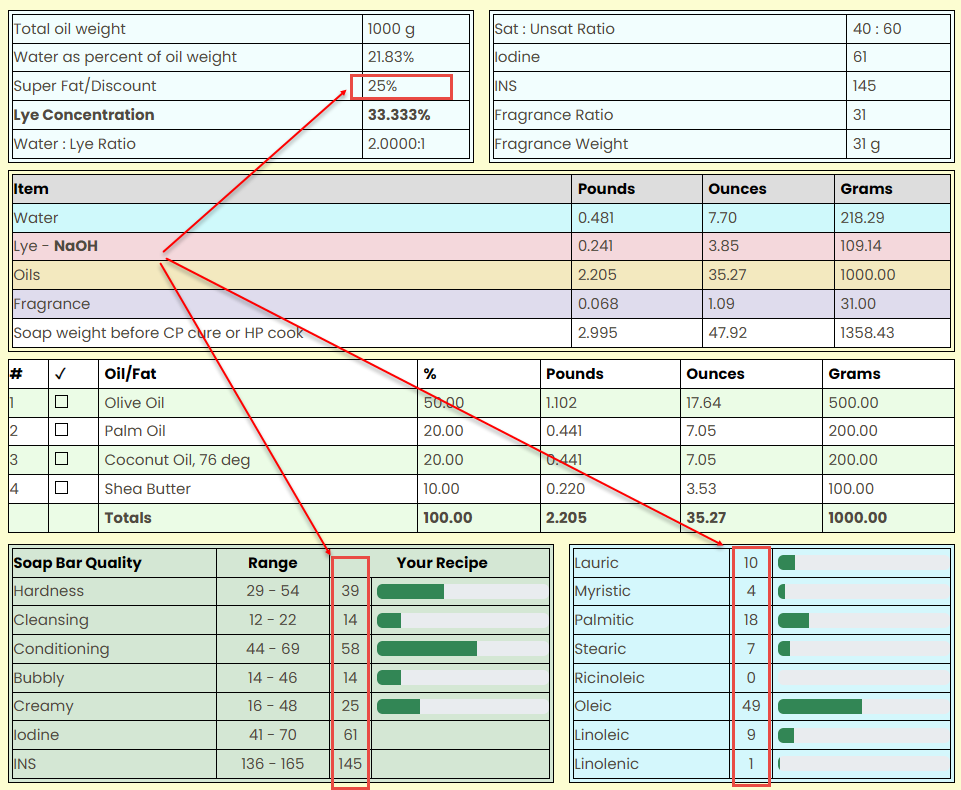
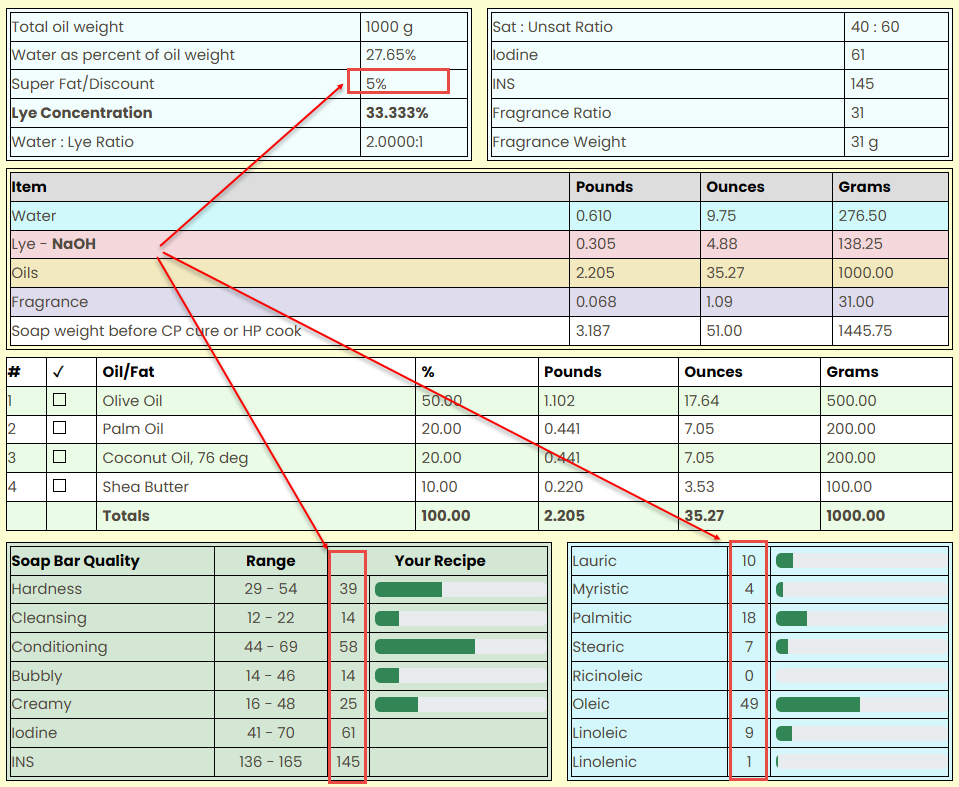
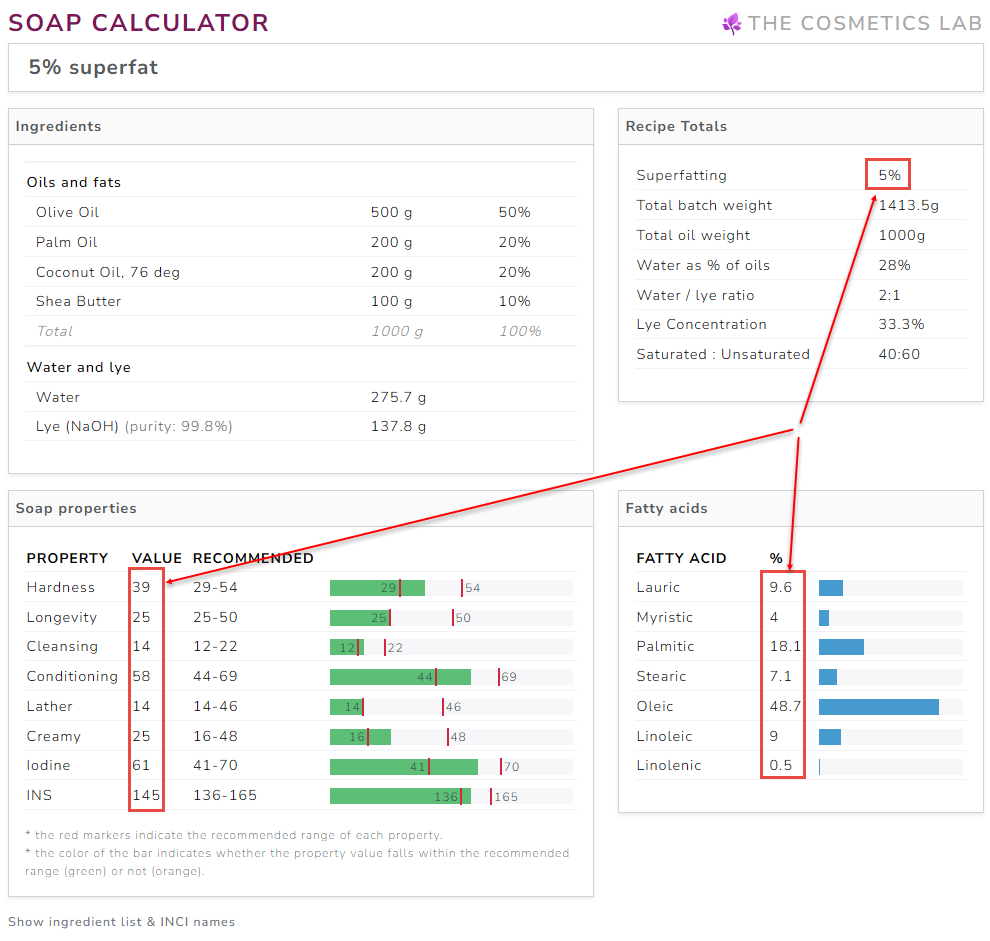
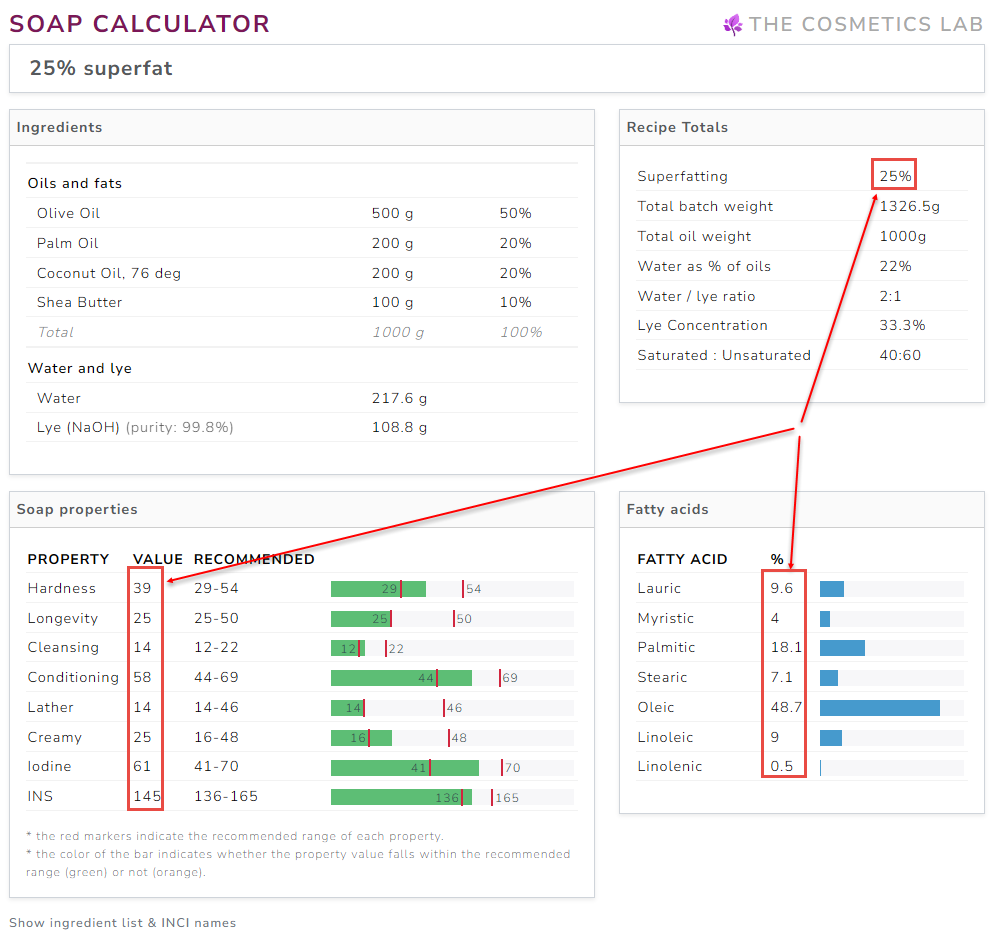
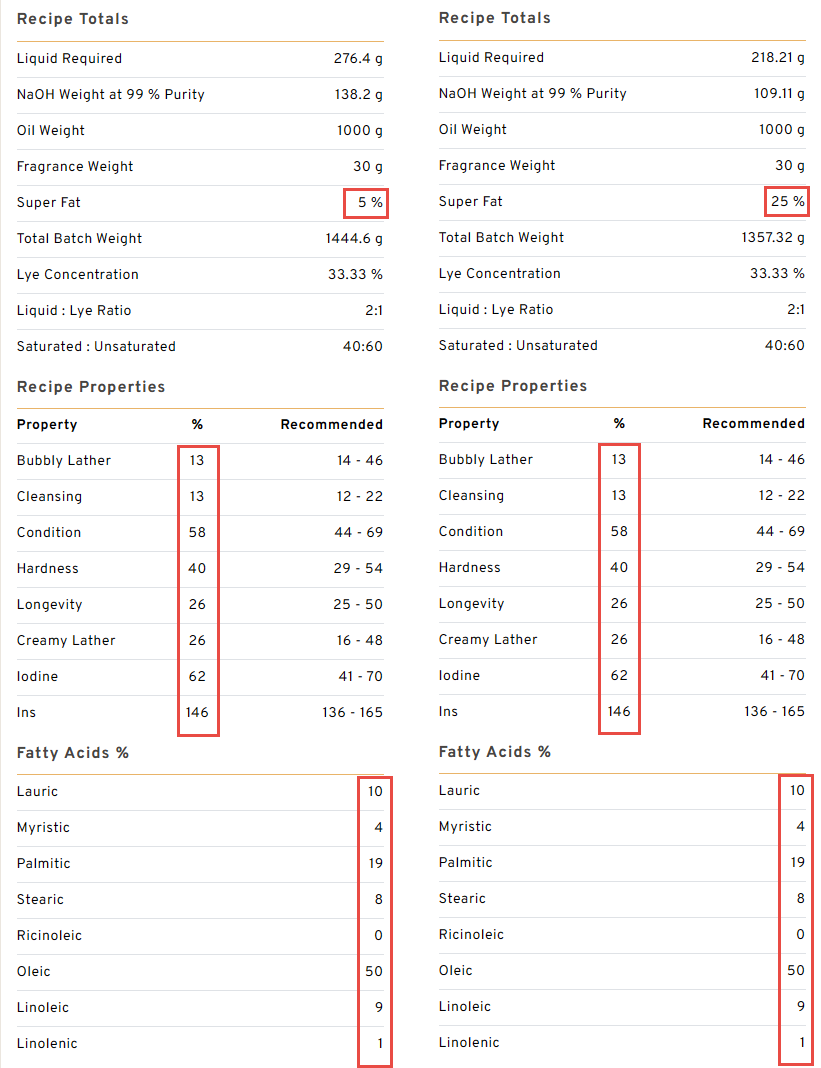
To illustrate this, at the end of this article I've attached screenshots of recipe results from some of the most popular soap calculators. The same recipe is used in all cases, with 2 variations: one with 5% superfat and one with 25% superfat.
Regardless of the superfat value, the percentages of fatty acids remain unchanged - and so do the values for soap properties.
But... this just doesn't seem right
You're probably wondering: if a soap contains 20% superfat, surely it does not behave the same as a soap that contains 5% superfat?
This is true. The whole point of this article is to highlight that soap calculators calculate soap property values based solely on the fatty acid profile of the recipe. Since changing the superfat does not change the fatty acid profile, the values of soap properties (hardness, cleansing, conditioning, etc.) remain the same.
For a deeper look at what these soap property values actually represent (and why they often differ from real-world experience), see: Soap properties: what soapmakers expect vs what soap calculators calculate.
Conclusion
Soap calculators are excellent tools, but it's important to understand what they do - and what they do not do.
Changing the superfat affects how much oil remains unsaponified in the final soap, which in turn influences how the soap feels and behaves in use. However, since soap calculators calculate soap property values based only on the fatty acid profile of the recipe, these values do not change when superfat changes.
Keeping this distinction in mind can help you better interpret calculator results and make more informed formulation decisions.
Screenshots
SoapCalc
The Cosmetics Lab
SoapmakingFriend
LyeCalc